Determining the Heating and Cooling Load of the Building
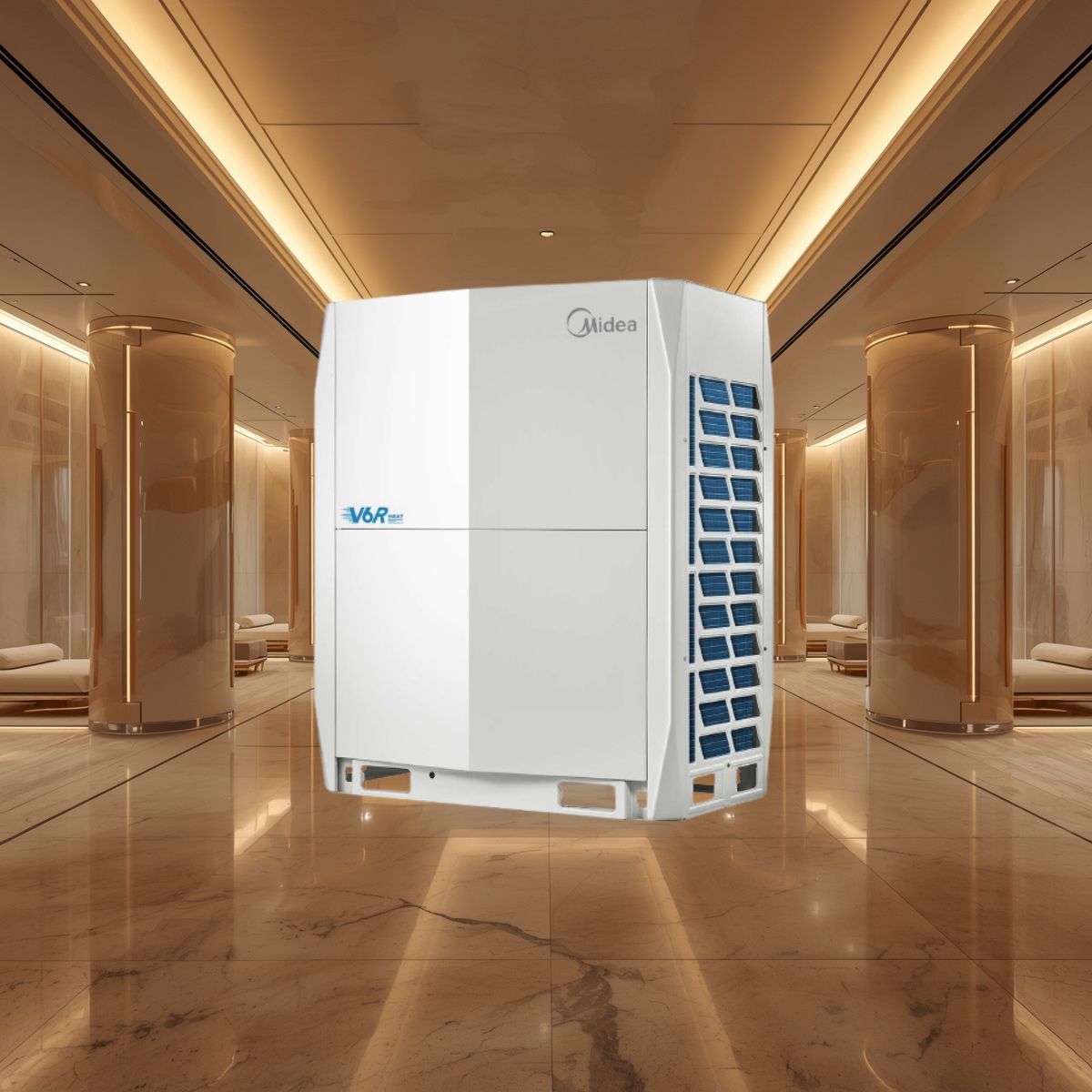
In the first step, the building’s heating and cooling loads must be precisely calculated, including solar gains, insulation, window area, building orientation, occupancy, equipment, etc. The sum of these loads represents the actual system requirement. This step is foundational for compressor capacity selection; if capacity is too low, the system will be overworked and lifespan will reduce, and if too large, initial cost and energy consumption increase. According to Midea’s VRF series manuals, you first calculate the required load then provisionally select the outdoor unit capacity.

Considering Safety Factor and Real Installation Conditions
In the next step, we consider the safety factor and real installation conditions: by accounting for peak loads during high-demand hours, possible changes in grille orientation, latent heat from equipment or occupants, and local ambient conditions such as outdoor temperature. For example, Midea’s V6-i series manual includes a safety factor and gives guidance on selecting the outdoor unit capacity relative to the sum of indoor unit capacities. Also the real installation site conditions—such as outdoor unit location relative to ive to the indoor units, piping length or height difference—must be taken into account.

Analyzing Indoor-Outdoor Unit Capacity Matching
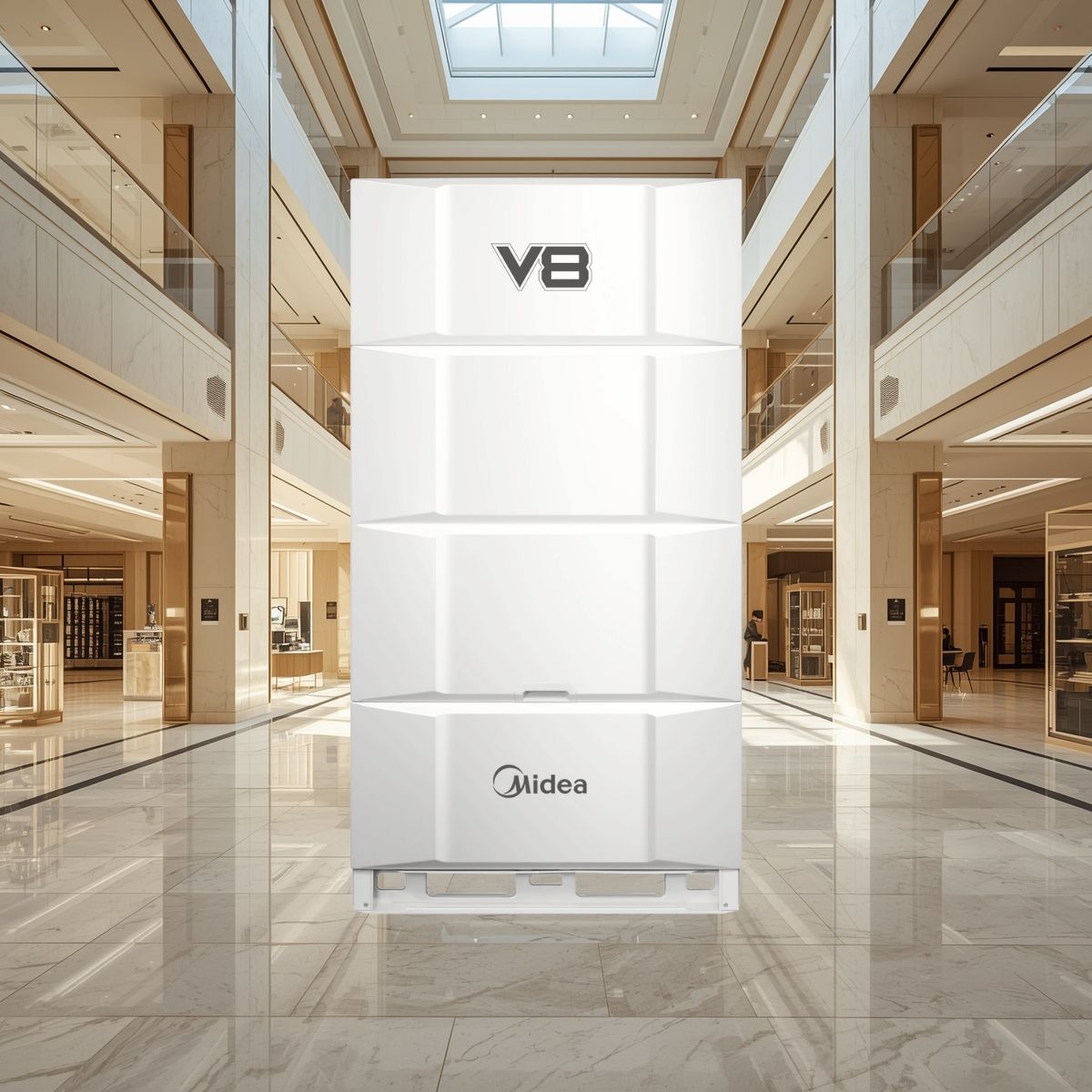
One of the key aspects in compressor capacity selection is analyzing the combination ratio between the total capacity of indoor units and the capacity of the outdoor unit. In its documentation, Midea for the V6-i series indicates that the total indoor units capacity relative to the outdoor unit capacity must lie within a specified range (for example 50% to 130%) to maintain optimal performance. Why? Because if the outdoor unit is too weak, the system cannot meet peak demand; and if it is overly large, cost and energy consumption increase. Hence the HVAC designer must precisely analyze indoor unit capacity, then match with the outdoor unit to select the appropriate compressor.
Correcting Actual Capacity for Piping, Height Difference and Environmental Conditions
Finally, after the initial selection, the selected capacity must be corrected by considering factors such as equivalent piping length, number of bends, difference in height between units, environmental conditions such as outdoor temperature and pipe insulation. In the example for the V6-i manual, a factor K₁ based on piping length and height difference is provided and must be multiplied by the raw capacity. This correction ensures the actual capacity is precisely defined and the system delivers the best performance in real conditions, longer lifespan, reduced energy bills, and a guaranteed premium comfortable living experience.

Comments ( 0)